




For years, sustainability in business meant recycling bins, Earth Day posts, and glossy reports filled with vague climate pledges. These symbolic gestures raised awareness—but in 2026, they no longer suffice. Stakeholders now demand proof that sustainability is embedded in how companies operate, not just how they appear.
True sustainability has shifted from a reputational add-on to a strategic discipline—woven into risk management, operations, innovation, and governance.
Why Symbolism Fails in 2026
Today’s business environment punishes performative sustainability. Regulators, investors, employees, and consumers can spot the gap between promises and practice. A company may tout net-zero ambitions while outsourcing to suppliers with poor labor standards—or claim “green” status while ignoring Scope 3 emissions from cloud computing and business travel.
The cost of greenwashing is no longer just reputational. In 2026:
- The EU’s CSRD requires verified sustainability disclosures from over 50,000 companies, including non-EU firms with significant European revenue.
- 78% of institutional investors now reject deals lacking auditable ESG data (PwC, Q1 2026).
- 64% of Gen Z professionals say they’d turn down a job at a company with weak environmental or social practices (Deloitte, 2026).
When sustainability lives only in marketing—not in procurement, finance, or product design—it becomes a liability, not an asset.
Sustainability as Core Business Strategy
Strategic sustainability aligns environmental stewardship, social responsibility, and ethical governance with long-term profitability. It’s not a cost center—it’s a value driver that enhances resilience and competitiveness in three key ways:
1. Risk mitigation
Climate volatility, water scarcity, and regulatory shifts are now material financial risks. Companies that proactively manage emissions, ensure supply chain due diligence, and prepare for carbon pricing avoid fines, operational disruptions, and stranded assets.
2. Operational efficiency
Energy retrofits, waste reduction, and circular material flows often deliver ROI in 12–24 months. These aren’t just “green” wins—they’re cost savings that directly boost margins.
3. Innovation and market advantage
Demand for transparent, low-impact products is accelerating. Businesses that embed sustainability into R&D—designing for reuse, repair, or regenerative outcomes—capture new markets and deepen customer loyalty.
Sustainability isn’t about doing less harm. It’s about building a business that actively contributes to ecological and social well-being—while remaining profitable.
Governance, Data, and Accountability
A strategic approach requires leadership commitment. Sustainability must be owned at the board and executive level—not siloed in a CSR department. This means:
- Setting clear, measurable targets tied to executive incentives
- Integrating ESG KPIs into budgeting, procurement, and performance reviews
- Using standardized frameworks like GRI or ISSB for transparent, comparable reporting
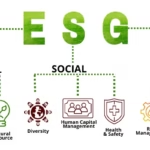
Reliable data is non-negotiable. In 2026, vague claims like “we’re reducing our footprint” are dismissed. Stakeholders expect third-party verified metrics on carbon, water, diversity, and supply chain ethics.
Culture Is the Catalyst
Strategy fails without culture. Employees at every level must understand how sustainability connects to their roles—whether in logistics, IT, HR, or sales. Training, clear communication, and inclusive goal-setting turn abstract principles into daily practice.
Organizations that foster this culture see higher engagement, lower turnover, and stronger innovation—because people want to work for companies that act with integrity, not just advertise it.
The Path Forward: Start Small, But Start Real
The biggest misconception is that sustainability requires grand gestures. It doesn’t. It requires direction, honesty, and one concrete step.
Ask: What is the greatest environmental or social risk—or opportunity—to my business in the next five years?
Then act:
- Switch to a renewable energy provider
- Map your top three supply chain dependencies
- Eliminate single-use inputs in your operations
- Survey your team on what “responsible business” means to them
In 2026, sustainable business isn’t about perfection. It’s about preparedness. And the most resilient companies don’t just adapt to the future—they build it.
Sources:
- European Commission, Corporate Sustainability Reporting Directive (CSRD), 2026
- PwC, Global ESG Investor Survey, Q1 2026
- Deloitte, 2026 Gen Z and Millennial Survey
- Global Reporting Initiative (GRI), ISSB Standards
- ISO 14001, UN Global Compact (framework references)