



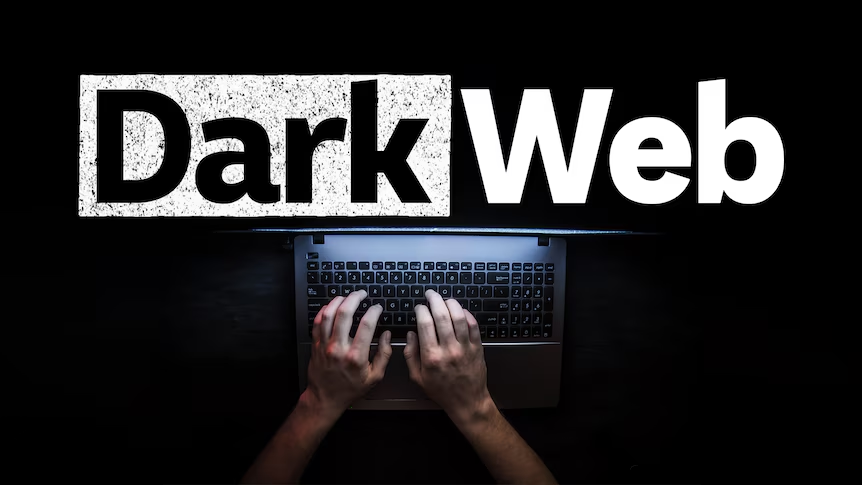
For more than a decade, a disturbing narrative has circulated online: somewhere in the hidden corners of the internet, criminals broadcast live torture, murder, and exploitation—accessible only to those who penetrate the so-called “Level 7.” These alleged broadcasts, known as “Red Rooms,” are described as invite-only, cryptocurrency-funded, and utterly untraceable.
The story is everywhere: YouTube documentaries, Reddit threads, TikTok horror compilations. It has frightened curious users, inspired copycat hoaxes, and become a staple of digital-age folklore.
But after more than 20 years of dark web monitoring by global law enforcement, cybersecurity researchers, and academic institutions, there remains no verified evidence that Red Rooms—live-streamed, real-time homicides for entertainment—have ever existed.
This is not an oversight. It is a consistent finding across jurisdictions. And yet, the myth persists. Understanding why—and distinguishing it from real (but different) threats—is essential for responsible digital discourse.
What Is a “Red Room”? The Myth Defined
The term “Red Room” likely originated from Japanese horror culture and migrated to English-language internet forums in the early 2000s. It describes a hidden online space where victims are allegedly tortured or killed in real time, with access restricted to vetted users who pay in cryptocurrency.
Key features of the myth:
- Live video feed with real victims
- Countdown timers and audience interaction
- Hosted on .onion sites (Tor network)
- Requires proof of prior criminal activity to enter
None of these features have ever been substantiated in a verified case.
What Law Enforcement and Researchers Have Found
1. No Confirmed Live Murder Streams
- Europol’s Internet Organised Crime Threat Assessment (IOCTA) has tracked dark web threats since 2013. In every edition through 2024, it notes the circulation of violent content—but explicitly states no verified instances of live homicide have been documented.
- The U.S. Department of Justice has prosecuted hundreds of dark web cases, including marketplaces for drugs, weapons, and stolen data. None involved actual contract killings or live-streamed murders.
- A comprehensive 2021 review by the Australian Institute of Criminology concluded: “Claims of live-streamed violence for entertainment remain in the realm of fiction and hoax.”
2. “Hitman-for-Hire” Sites: Real Listings, No Real Hits
You are correct: hitman-for-hire services have appeared on the dark web. Sites like Besa Mafia (2015–2016) and The Hitman Network advertised assassinations, accepted Bitcoin payments, and even provided “proof of kill” videos.
But here’s what investigations revealed:
- Besa Mafia took over $1 million in payments. The FBI infiltrated it and found zero murders were committed. The operator, Yura Martynyuk, created fake videos using movie clips and staged photos. Charged in 2018, he pleaded guilty to fraud and identity theft—not homicide.
- In 2020, German authorities shut down another site after users paid €50,000 for hits. Again, no violence occurred.
- Europol confirms: All known assassination markets are either scams or law enforcement honeypots.
So while the services are advertised, the outcomes are fictional. This is fraud—not organized murder.
3. Child Sexual Abuse Material (CSAM): Real, But Not “Red Rooms”
CSAM is trafficked online, including on the dark web. This is a serious, verified crime. However:
- The vast majority of CSAM is recorded, not live-streamed, to avoid real-time digital footprints.
- In recent years, much of this activity has migrated to encrypted messaging apps (Telegram, Wickr) rather than Tor-based sites.
- Even in these cases, live interaction with victims is exceptionally rare and typically linked to pre-existing grooming—not public broadcasts.
Conflating CSAM with “Red Rooms” misrepresents both the nature of the crime and the capabilities of offenders.
Why the Myth Persists—And Feels Real
1. Sophisticated Hoaxes
Scammers create fake .onion sites with looping horror footage, fake chat logs, and countdown timers. These are designed to:
- Extort Bitcoin (“Pay to stop the stream”)
- Harvest login credentials
- Generate ad revenue from shock content
In 2022, a teen in Poland was hospitalized after viewing a “Red Room” link—only to discover it was a clip from the horror film Hostel.
2. Media Amplification
Videos titled “I Accessed a Real Red Room” on YouTube and TikTok use simulated screen recordings, ominous music, and unverified testimonials. Few include disclaimers. Algorithms reward engagement—not truth.
3. Psychological Priming
Humans are wired to believe threatening narratives. A 2024 study in New Media & Society found that 68% of people who believed Red Rooms were real had never used Tor—they’d encountered the idea through entertainment media.
What Is Real on the Dark Web?
To be clear: the dark web is not harmless. Verified criminal activity includes:
- Drug marketplaces (though most major ones—Silk Road, AlphaBay—have been shut down)
- Stolen data markets (logins, credit cards, corporate credentials)
- CSAM distribution networks (though increasingly on encrypted apps)
- Fraud services (fake IDs, phishing kits, carding forums)
But none of these match the cinematic horror of Red Rooms. As former FBI cyber agent Joseph Carrabba stated: “The real dark web is inefficient, paranoid, and full of scammers. That’s why serious criminals avoid it.”
Why This Distinction Matters
Believing in Red Rooms doesn’t just spread fear—it diverts attention from real threats:
- A business owner fearing “Level 7” may ignore phishing training—the actual cause of 91% of breaches (Verizon DBIR 2025).
- Parents worried about live murder streams may overlook real grooming risks on Instagram or Snapchat.
- Journalists citing “Red Rooms” as fact erode public trust in digital reporting.
Digital literacy requires proportional risk assessment, not sensationalism.
Conclusion
Red Rooms are a digital-age bogeyman: emotionally resonant, technically implausible, and forensically unsupported. Their endurance says more about human psychology and media ecosystems than about the structure of the internet.
The next article will examine how the dark web is actually used—by criminals, journalists, activists, and intelligence agencies—based on court records, leaked chats, and investigative journalism. The truth is less lurid, but far more valuable.
Sources for final publication will include: U.S. Department of Justice indictments (Besa Mafia case, 2018); Europol IOCTA reports (2015–2024); Australian Institute of Criminology, “Dark Web Myths and Realities” (2021); New Media & Society, “Digital Folklore and Moral Panic” (2024); Verizon Data Breach Investigations Report (2025); interviews with FBI and Europol cybercrime units.
Disclaimer:
This article discusses disturbing online myths for educational purposes only. No support or instruction is given for accessing illegal content. All claims about “Red Rooms” and hitman services are evaluated against verified law enforcement and academic research. Readers are advised never to explore hidden services out of curiosity. Report suspicious content to national cybercrime authorities.