



At ShortLeap, our mission is to make digital knowledge clear and practical. We believe that staying informed about technology is not only about cybersecurity or coding. It is also about using data to build financial resilience and make confident decisions about where and how we live.
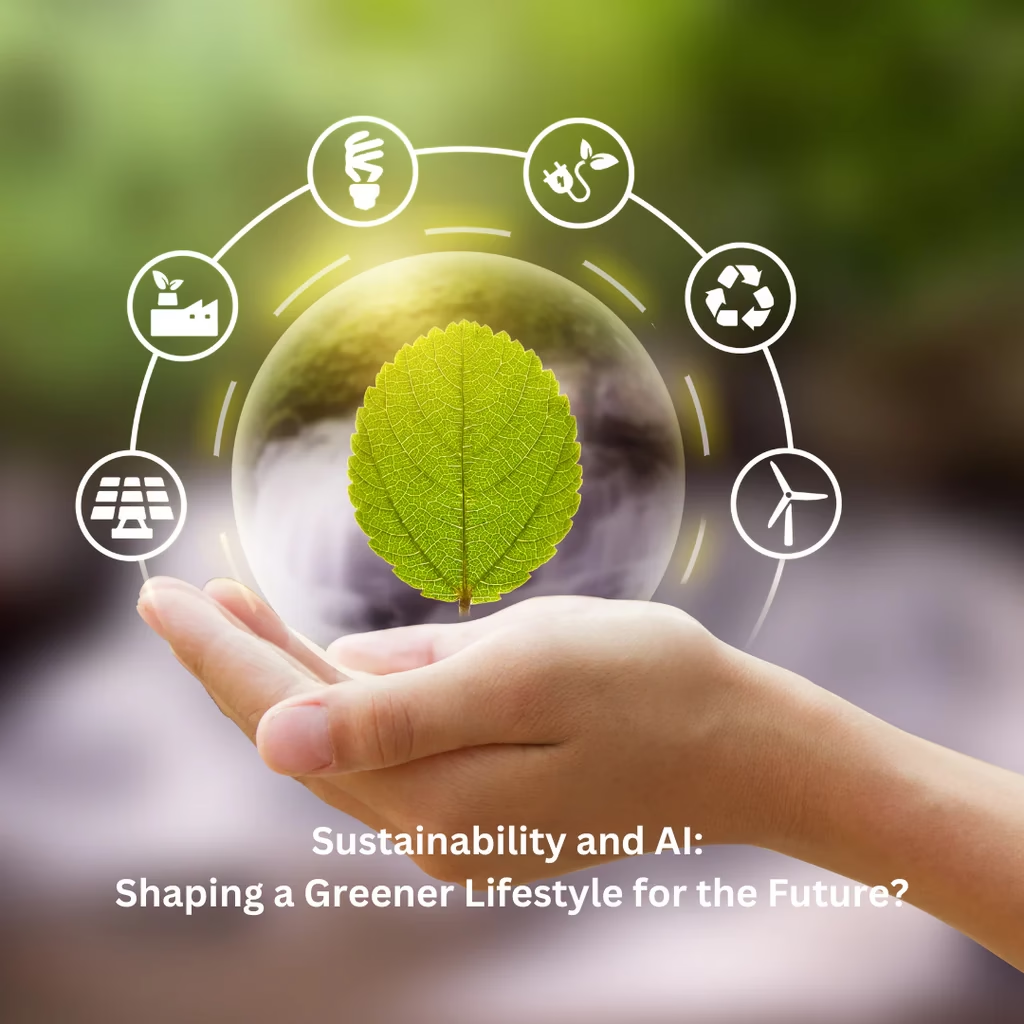
In a rapidly changing world, sustainability has moved beyond being a buzzword to becoming a critical factor in housing and financial planning. New developments in Artificial Intelligence (AI) are now providing the data needed to create cooler, safer, and more cost-effective living environments.
The Intersection of AI and Sustainable Housing
For many people, the concept of sustainable housing implies expensive solar panels or high-tech appliances. In reality, sustainability often begins with the environment surrounding our homes. Google has introduced tools such as the Tree Canopy Lab and the Environmental Insights Explorer (EIE), which use AI to analyze aerial imagery and map urban environments.
For tech-aware homeowners and community advocates, understanding these tools creates an opportunity to learn, save, and make informed decisions by using data that was previously difficult to access.
How the Tech Works: Turning Pixels into Trees
To make informed technology choices, it is helpful to understand how these tools operate. The Tree Canopy Lab combines artificial intelligence with high-resolution aerial imagery collected across different seasons.
Instead of relying on slow, manual tree surveys, specialized AI models analyze these images to detect tree coverage automatically. By processing multi-angle and detailed visual data, the system identifies existing canopy and highlights areas where greenery is limited.
This approach makes environmental data more accessible. It allows city planners, community organizations, and residents to gain a clear overview of tree distribution and identify neighborhoods that would benefit most from additional planting.
Financial Resilience and the Heat Island Effect
Why should a ShortLeap reader interested in financial empowerment care about tree mapping? The answer lies in the heat island effect.
Cities often become significantly warmer than surrounding rural areas due to dense infrastructure and limited vegetation. This leads to higher energy consumption, increased cooling costs, and greater health risks. AI-based analysis has shown that neighborhoods with low tree canopy coverage are especially vulnerable to extreme heat.
- The Cost of Heat: High temperatures increase electricity bills and strain household budgets.
- The Value of Shade: Trees reduce surface and air temperatures while improving air quality.
- The Inequality Gap: Data shows that wealthier neighborhoods tend to have more tree cover, while low-income communities often experience tree scarcity. In Los Angeles, for example, more than 50 percent of residents live in areas with less than 10 percent tree canopy coverage.
By using these tools to identify low-canopy areas, individuals and communities can advocate for targeted tree planting that contributes to lower energy costs and stronger long-term resilience.
Practical Knowledge: Using Data to Plan
Part of ShortLeap’s mission is helping readers recognize practical opportunities. The Environmental Insights Explorer platform extends beyond tree analysis and provides insights on several key environmental factors, including:
- Carbon Emissions: Estimating emissions from buildings and transportation systems.
- Solar Potential: Assessing rooftop solar capacity for residential and commercial properties.
This data supports informed decision-making. It enables local governments, homeowners, and community leaders to benchmark environmental performance and set realistic sustainability targets. For prospective buyers and residents, these insights help answer important questions, such as whether a neighborhood is prepared for rising temperatures or whether it offers long-term energy savings potential.
Securing a Greener Future
As urban temperatures and energy demands continue to rise, access to reliable environmental data is becoming increasingly important. The application of AI to urban forestry demonstrates how technology can support both equity and resilience.
By reducing the cost and complexity of data collection, these tools allow communities to plan tree planting initiatives that prioritize areas most affected by heat and environmental stress.
At ShortLeap, we encourage readers to stay informed and proactive. Whether the goal is lowering carbon impact, reducing summer cooling costs, or making smarter housing decisions, AI-powered sustainability tools offer practical ways to protect both the environment and household finances.
Sources
- Google Earth Blog: Helping Cities Seed New Trees with Tree Canopy Lab
- Google Environmental Insights Explorer: insights.sustainability.google
- City of Los Angeles Urban Forestry and Tree Canopy Data