



How AI Voice Cloning Powers Family Emergency Scams
“Mom, it’s me — I’m in jail. I need $3,000 right now. Don’t tell anyone.”
You hear your daughter’s voice — clear, urgent, trembling.
But she’s thousands of miles away, safe at college.
You’ve been scammed.
And you’re not alone.
This isn’t science fiction. It’s happening every day — in homes across the U.S., Pakistan, Saudi Arabia, and beyond.
The Scam in One Sentence
Scammers use artificial intelligence to clone the voice of a loved one — then call you, pretending they’re in urgent trouble. They create panic. You act. They vanish with your money.
In 2024, the FBI’s Internet Crime Complaint Center (IC3) reported over 10,000 cases of AI voice cloning scams in the United States alone — with losses exceeding $50 million. By early 2025, Interpol issued a global alert warning that these scams are spreading rapidly across South Asia, the Middle East, and Southeast Asia — targeting families who trust phone calls more than text messages or apps.
This is no longer a futuristic threat.
It’s here.
And it’s personal.
How It Works: The Three-Step Process
Step 1: They Steal Your Loved One’s Voice
Scammers don’t guess — they listen.
They search for audio of your family member from:
- Birthday videos on Facebook or WhatsApp status updates
- Holiday calls saved in voicemail
- Public YouTube clips or TikTok reels of family gatherings
Using free AI tools like ElevenLabs, Resemble.ai, or even mobile apps, they can generate a near-perfect voice clone in under five minutes.
Real case (U.S.): A woman in Ohio lost $28,000 after a scammer used a 12-second clip of her son’s voice — recorded during a Zoom call — to impersonate him.
Likely scenario (Pakistan/Middle East): In Lahore, a grandmother received a call from a voice identical to her grandson — who had posted a short video of himself singing on Facebook months earlier. The scammer asked for 400,000 PKR via JazzCash.
These attacks exploit our most human instinct: to protect family.
Step 2: The Call That Feels Real
They call — often late at night or early morning — and say things like:
“Dadi, it’s me. I’m in Dubai. The police say I was caught with fake documents. I need 30,000 AED for bail — don’t tell your sister.”
“Bhai, I’m stuck in a traffic accident in Riyadh. The doctor says I need 50,000 SAR immediately — or I’ll be detained.”
The voice? Perfect.
The emotion? Real.
The urgency? Overwhelming.
You don’t think. You feel.
And that’s exactly what they want.
Step 3: The Payment Trap
They never ask for a check.
They demand instant, irreversible payment through:
- JazzCash or Easypaisa (Pakistan)
- STC Pay, Apple Gift Cards, or Google Play Cards (Saudi Arabia, UAE)
- Paytm or PhonePe (India)
- Bitcoin or crypto wallets (global)
Once sent, the money is gone — with no way to trace or recover it.
Verified by Interpol (2025):
“AI voice scams using mobile wallets are now among the top three financial fraud types in Pakistan and the Gulf region.”
Warning Signs: 5 Red Flags to Watch For
| Red Flag | What It Means |
|---|---|
| “Don’t tell anyone” | Legitimate emergencies do not require secrecy. If it’s real, they’d want help — not silence. |
| Urgent emotional pressure | Scammers rely on panic. Real people ask for help — not instant cash. |
| Unusual payment method | Hospitals, police, lawyers — none of them accept gift cards, mobile wallet transfers, or crypto. Ever. |
| Voice sounds slightly off | Listen for unnatural pauses, robotic tone, or delayed responses — signs of AI generation. |
| They know personal details | That’s because they searched your social media. Your photo of your dog? That’s their script. |
Pro Tip from ShortLeap:
If someone says, “It’s me,” always respond with a personal question only your loved one would know — like “What did we name our first dog?” or “What did you eat for breakfast yesterday?”
AI clones cannot answer unexpected, specific questions — yet.
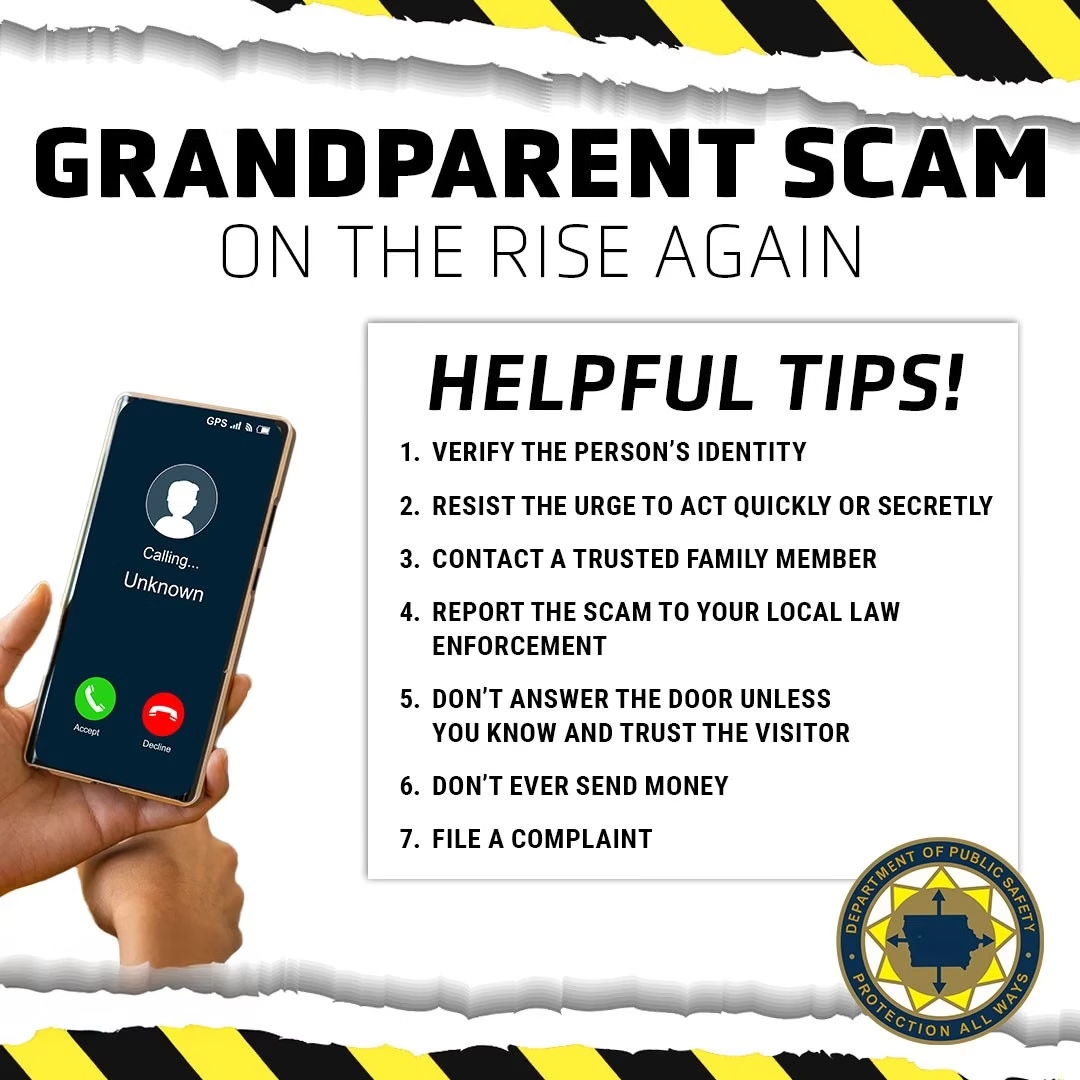
What to Do If You’re Targeted
- Stop. Breathe. Do Not Send Money.
Panic is the scammer’s weapon. Pause for ten minutes. Walk away from the phone. - Call Back Using a Known Number
Use the number you’ve saved in your contacts — not the one they called from. - Ask a Private Question
“Remember when we got lost at the lake in 2018? What did we order for dinner?”
If they hesitate — it’s fake. - Report It Immediately
- Pakistan: Report to PakCERT → https://www.pakcert.gov.pk
- UAE: Report to TRA Cybersecurity → https://www.tra.gov.ae
- Saudi Arabia: Report to NCSC → https://www.ncsc.gov.sa
- Global: Report to IC3 (FBI) → https://www.ic3.gov
- If you sent gift cards: Contact the issuer — sometimes they can cancel the balance if reported quickly.
- Warn Your Family
Share this story. This scam is spreading fast — especially among seniors who trust phone calls.
What to Do If You’ve Already Been Scammed
Do not blame yourself.
You were targeted by sophisticated technology — not weakness.
Follow this recovery plan:
| Step | Action |
|---|---|
| 1 | Freeze your bank accounts and change passwords on all financial apps. |
| 2 | Contact your bank or mobile wallet provider — ask if they can reverse the transaction (rare, but possible within 24–48 hours). |
| 3 | Report to your country’s cybercrime unit — your report helps track patterns and stop future victims. |
| 4 | Tell your family — so they don’t get tricked next. |
| 5 | Block the number and delete any voicemails from the scammer. |
Security Note from ShortLeap:
Once you’ve been targeted, enable two-factor authentication (2FA) on all accounts and limit public posts containing your voice or family members’ voices.
One Key Action Step — Do This Today
Call one family member right now — just to say hello — and ask them:
“If I ever call you in a panic asking for money, what’s the one question you’ll ask me to prove it’s really me?”
Write down their answer. Save it in your phone notes.
This simple conversation could save you hundreds of thousands of rupees, dirhams, or dollars.
Next in This Series
Article #1.1: “The Voice Call That Sounds Like Your Mom”
→ How scammers harvest voices from Facebook, WhatsApp, and TikTok — and how to lock them down before it’s too late.
(Coming tomorrow. Subscribe to ShortLeap’s scam alerts so you don’t miss it.)
Final Thought from ShortLeap
“The best defense against AI scams isn’t technology — it’s trust, but verify.
Love your family.
But never let emotion override your common sense.”